

Delving into the realm of Best Multiple Sclerosis Treatments Approved Worldwide, this opening paragraph sets the stage for an enlightening exploration of cutting-edge treatments and breakthroughs in the field. Prepare to uncover the latest advancements and insights in managing this complex condition with precision and care.
Following this introduction, detailed information about the topic will be presented, shedding light on the various aspects of multiple sclerosis treatments.
Overview of Multiple Sclerosis Treatments

Multiple Sclerosis (MS) has a long history of treatments that have evolved over the years to improve the quality of life for patients. Early treatments focused on symptom management, but as our understanding of the disease progressed, more targeted therapies were developed.
Types of Treatments
- Disease-Modifying Therapies: These medications work to modify the course of the disease by reducing relapses, slowing progression, and preventing new lesions.
- Symptomatic Treatments: These therapies target specific symptoms of MS such as fatigue, spasticity, pain, and bladder dysfunction.
- Rehabilitation Therapies: Physical therapy, occupational therapy, speech therapy, and cognitive rehabilitation can help improve function and quality of life for MS patients.
Early treatment is crucial in managing MS as it can help slow disease progression, reduce relapses, and delay disability. Disease-modifying therapies are most effective when started early in the disease course, highlighting the importance of early diagnosis and intervention.
Disease-Modifying Therapies (DMTs)
Disease-Modifying Therapies (DMTs) play a crucial role in treating Multiple Sclerosis (MS) by targeting the underlying immune system dysfunction that leads to the disease. These treatments are designed to reduce relapses, slow down disease progression, and potentially delay the onset of disability in MS patients.
Comparison of Different DMTs
- Interferon Beta: Interferon beta drugs, such as Avonex and Rebif, are among the first DMTs approved for MS. They work by regulating the immune response and reducing inflammation in the central nervous system.
- Glatiramer Acetate: Glatiramer acetate, commonly known as Copaxone, is another DMT used to reduce relapses in MS patients. It works by blocking the immune system's attack on myelin, the protective covering of nerve fibers.
- Fingolimod: Fingolimod, marketed as Gilenya, is an oral DMT that prevents immune cells from entering the brain and spinal cord, reducing inflammation and nerve damage in MS.
- Natalizumab: Natalizumab, sold under the brand name Tysabri, is a monoclonal antibody that blocks immune cells from crossing the blood-brain barrier, reducing inflammation and relapses in MS patients.
Mechanism of Action of DMTs
Disease-Modifying Therapies (DMTs) work by targeting specific components of the immune system that are involved in the development and progression of Multiple Sclerosis. These therapies aim to reduce the frequency and severity of relapses, slow down the accumulation of disability, and potentially preserve brain function over time.
By modulating the immune response and reducing inflammation in the central nervous system, DMTs help to protect nerve fibers and prevent further damage in MS patients.
Symptomatic Treatments for MS
Managing specific symptoms of multiple sclerosis (MS) is crucial in improving the quality of life for patients. Symptomatic treatments target individual symptoms to provide relief and enhance overall well-being.
Pain Management
- Nonsteroidal anti-inflammatory drugs (NSAIDs) can help alleviate pain and inflammation.
- Anticonvulsants, such as gabapentin, may be prescribed for neuropathic pain.
- Physical therapy and exercise can also play a role in managing pain and improving mobility.
Cognitive Impairment
- Medications like donepezil or memantine can help with memory and cognitive function.
- Cognitive rehabilitation therapy can assist in improving cognitive skills and coping strategies.
- Developing routines and using memory aids can also be beneficial for managing cognitive symptoms.
Fatigue
- Stimulant medications, such as modafinil, may be prescribed to combat fatigue.
- Energy conservation techniques and proper sleep hygiene can help manage fatigue levels.
- Regular exercise and stress management strategies can also contribute to reducing fatigue.
Bladder Dysfunction
- Medications like oxybutynin can be used to treat overactive bladder symptoms.
- Behavioral techniques, such as timed voiding, can help regulate bladder function.
- Fluid management and pelvic floor exercises may also aid in managing bladder dysfunction.
Emerging and Experimental Treatments
As research in the field of multiple sclerosis (MS) progresses, new and experimental treatments are constantly being explored to improve the quality of life for patients. These innovative approaches hold promise for better managing the symptoms and progression of the disease.
Stem Cell Therapy in MS Treatment
Stem cell therapy has garnered significant attention as a potential treatment for MS. This cutting-edge approach involves using stem cells to repair damaged tissues and modulate the immune system, which plays a key role in the development of MS. Clinical trials and research studies are underway to evaluate the safety and efficacy of stem cell therapy in treating MS.
Challenges and Opportunities in Developing Innovative Treatments for MS
Developing innovative treatments for MS comes with its own set of challenges and opportunities. Challenges may include regulatory hurdles, the need for long-term safety data, and the high cost of research and development. However, the potential opportunities in this area are vast, with the chance to revolutionize the treatment landscape for MS patients and improve their quality of life significantly.
Conclusive Thoughts
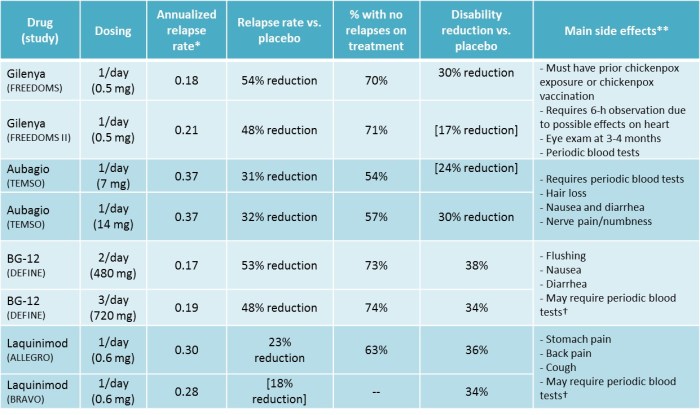
Concluding this discussion on Best Multiple Sclerosis Treatments Approved Worldwide, we have journeyed through the landscape of innovative therapies and approaches for managing this condition. From disease-modifying treatments to emerging experimental options, the horizon looks promising for those battling multiple sclerosis.
Stay informed, stay empowered, and stay hopeful on the path towards better health and well-being.
Answers to Common Questions
What is the importance of early treatment in managing MS?
Early treatment plays a crucial role in managing MS by helping to slow down disease progression and reduce the frequency of relapses.
How do Disease-Modifying Therapies (DMTs) work in treating MS?
DMTs work by targeting the immune system to reduce inflammation in the central nervous system, thereby decreasing relapses and slowing the progression of the disease.
Are there any specific symptomatic treatments used to manage MS symptoms?
Yes, there are symptomatic treatments tailored to address specific symptoms such as fatigue, muscle spasms, and cognitive issues in MS patients.
What are some challenges in developing innovative treatments for MS?
Challenges in developing innovative treatments for MS include ensuring safety, efficacy, and accessibility of new therapies, as well as navigating regulatory hurdles and funding constraints.






![Natural Remedies to Treat Crohn's and Colitis [Slideshow]](https://medic.infogarut.id/wp-content/uploads/2025/12/Best-Treatment-for-Crohns-Disease-Expert-Insights-120x86.jpg)