

Delving into the realm of Crohn’s Disease Treatments: Medication vs Lifestyle Changes, this piece sets the stage for a comprehensive exploration, drawing readers in with intriguing insights and valuable information.
Exploring the common medications and lifestyle modifications for managing Crohn’s disease reveals a rich tapestry of options for individuals seeking effective treatment.
Medication for Crohn’s Disease
When it comes to managing Crohn's disease, medications play a crucial role in controlling symptoms and reducing inflammation in the digestive tract.
Common Medications for Crohn’s Disease
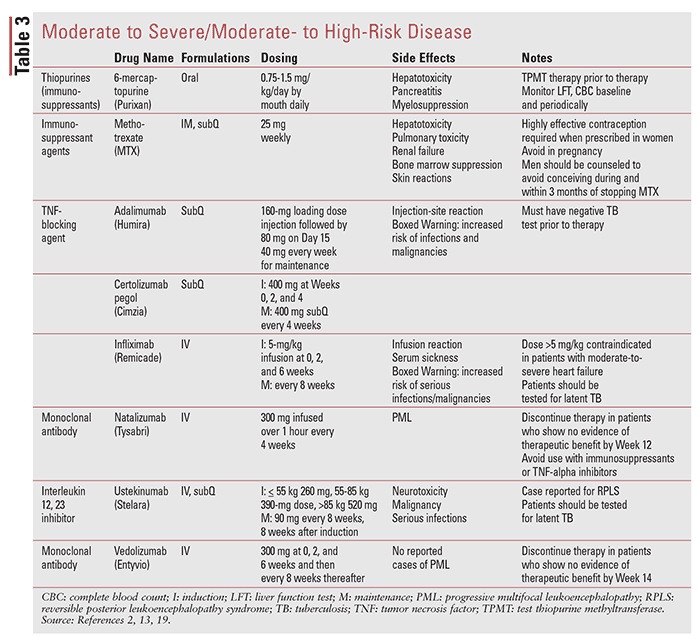
- Corticosteroids: Such as prednisone, to reduce inflammation.
- Immunomodulators: Like azathioprine or methotrexate, to suppress the immune system.
- Biologics: Including infliximab or adalimumab, to target specific proteins in the body that cause inflammation.
Mechanism of Action of Crohn’s Disease Medications
- Corticosteroids work by suppressing the immune system and reducing inflammation in the digestive tract.
- Immunomodulators help regulate the immune response to prevent inflammation in the intestines.
- Biologics target specific proteins involved in the inflammatory process, blocking them to reduce inflammation.
Potential Side Effects of Crohn’s Disease Medications
- Corticosteroids may cause weight gain, mood changes, and increased risk of infections.
- Immunomodulators can lead to liver problems, pancreatitis, and increased risk of infections.
- Biologics may result in infusion reactions, increased risk of infections, and possible development of antibodies.
Comparison of Medications for Crohn’s Disease
- Corticosteroids provide quick relief but are not suitable for long-term use due to side effects.
- Immunomodulators are effective in maintaining remission but may take longer to show results.
- Biologics are often used for moderate to severe cases and can target specific areas of inflammation.
Lifestyle Changes for Crohn’s Disease
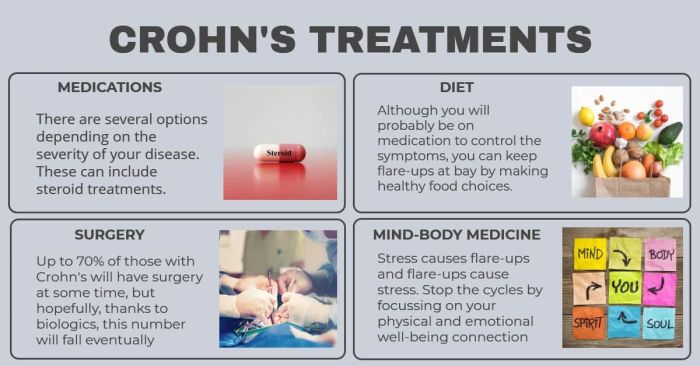
Crohn’s disease is a chronic condition that requires a comprehensive approach to management. In addition to medication, lifestyle changes play a crucial role in controlling symptoms and improving quality of life for individuals with Crohn’s disease
Diet Modifications
Maintaining a healthy diet is essential for managing Crohn’s disease. Individuals with Crohn’s should focus on a low-residue diet, which limits the consumption of high-fiber foods that can exacerbate symptoms. Opting for easily digestible foods like lean proteins, cooked fruits and vegetables, and refined grains can help reduce inflammation and discomfort.
Stress Management Techniques
Stress has been shown to trigger flare-ups in Crohn’s disease patients. Implementing stress management techniques such as mindfulness meditation, deep breathing exercises, and yoga can help reduce stress levels and improve overall well-being. Prioritizing self-care and finding healthy outlets for stress can have a positive impact on managing Crohn’s symptoms.
Examples of Lifestyle Changes
Regular exercise
Physical activity can help reduce inflammation and improve digestion.
Proper hydration
Staying hydrated is crucial for maintaining digestive health.
Quality sleep
Getting enough rest is essential for overall health and can help reduce inflammation.
Avoiding trigger foods
Identifying and avoiding foods that worsen symptoms can help prevent flare-ups.
Final Conclusion
In conclusion, the juxtaposition of medication and lifestyle changes in treating Crohn’s disease underscores the multifaceted approach required for optimal management. By embracing a blend of medical interventions and holistic adjustments, individuals can navigate the complexities of this condition with greater resilience and well-being.
FAQ Compilation
What are the potential side effects of Crohn’s disease medications?
Common side effects may include nausea, diarrhea, and fatigue, but individual reactions can vary. It's important to discuss any concerns with your healthcare provider.
How important are diet modifications for individuals with Crohn’s disease?
Diet modifications play a crucial role in managing Crohn’s disease by reducing triggers and promoting gut health. Working with a nutritionist can be beneficial in creating a personalized plan.
Can stress management techniques truly impact the management of Crohn’s disease?
Yes, stress management techniques like mindfulness, yoga, and deep breathing can help reduce flare-ups and improve overall well-being in individuals with Crohn’s disease.
What are some examples of lifestyle changes that have shown positive outcomes in Crohn’s disease patients?
Regular exercise, adequate sleep, and avoiding smoking are examples of lifestyle changes that have been associated with positive outcomes in individuals with Crohn’s disease.






![Natural Remedies to Treat Crohn's and Colitis [Slideshow]](https://medic.infogarut.id/wp-content/uploads/2025/12/Best-Treatment-for-Crohns-Disease-Expert-Insights-120x86.jpg)